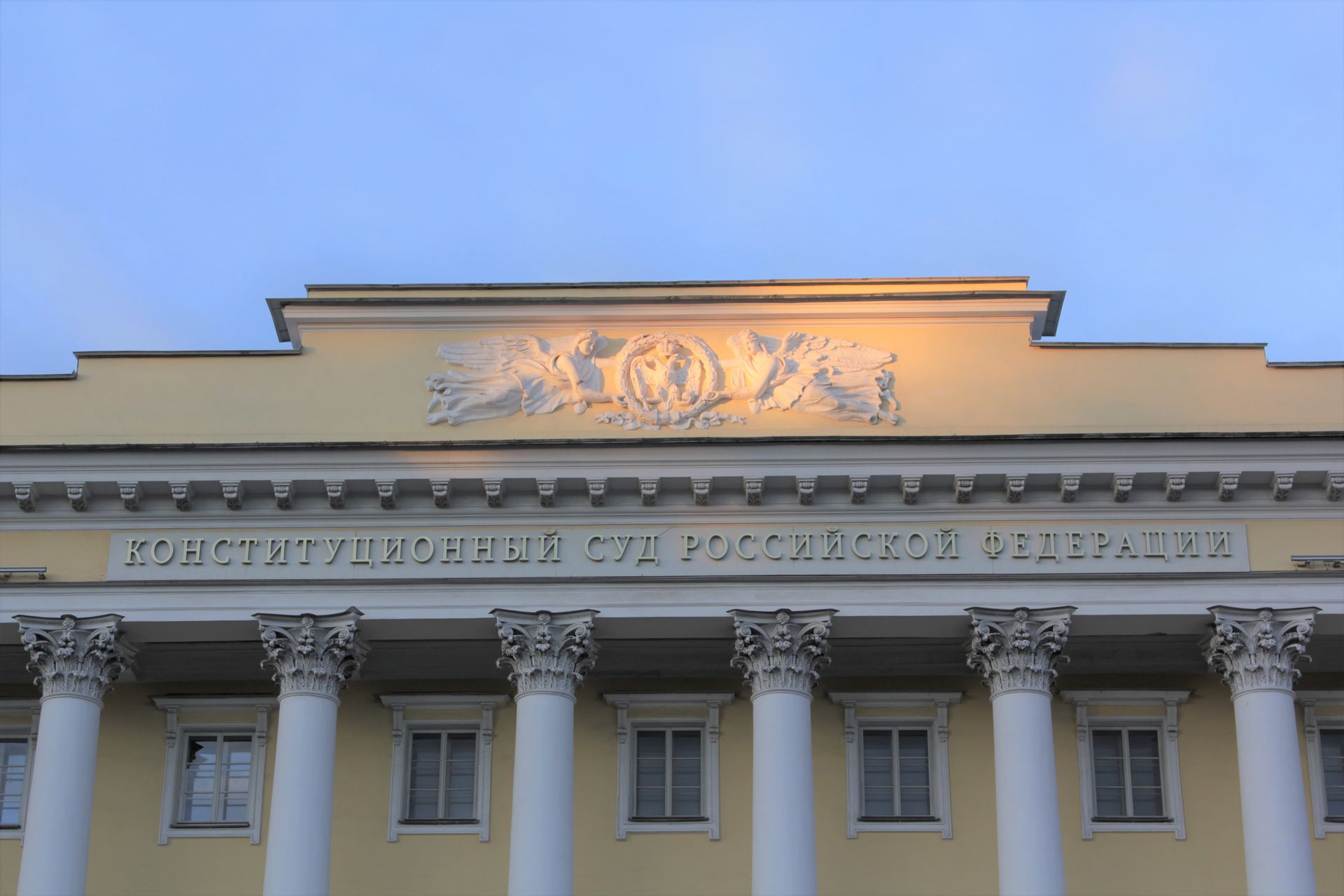
 On 24 June 2025, the Constitutional Court of the Russian Federation adopted Judgement No.26-П adopted in accordance with Article 47.1 of the Federal Constitutional Law «On the Constitutional Court of the Russian Federation». The case on the review of constitutionality of Articles 15, 16, 151 and 1069 of the Civil Code of the Russian Federation and the Article 24.7 of the Code of Administrative Offences of the Russian Federation was considered in connection with a complaint of сitizen A.V.Ivchenkov.
 Factual background
In 2021, Alexander Ivchenkov was involved in a car accident in Balashikha in the Moscow region. The traffic police inspector refused to initiate a case on administrative offense. The inspector noted in the decision that the applicant started driving without ensuring that the maneuver was safe, which led to the car accident. The applicant did not agree with this conclusion and challenged the decision. The cassation court recognized that the Code of Administrative Offences of the Russian Federation does not provide for a discussion of a violation of the traffic rules when refusing to initiate an administrative case. After that, A. Ivchenkov appealed to the court to recover the expenses for a representative and for power of attorney incurred when challenging this decision. However, the courts refused him, since the applicant was not brought to administrative responsibility, and the claim that he had violated traffic rules did not entail any adverse consequences for him.
Position of the Court
The Constitution guarantees everyone the right for judicial protection of their rights and freedom, including the possibility of appealing decisions of the state authorities.
The contested article of the Code of Administrative Offences does not relate the expenses for representative and power of attorney to the expenses of the administrative case. In practice, such expenses can be recovered in favor of a person at the expenses of the state in the case of a refusal to bring him liable or appeal against the relevant decision. However, the regulation does not cover cases where these expenses arise in connection with the consideration of an appeal against a decision to refuse initiation of proceedings.
At the same time, in the practice of arbitration courts, the satisfaction of such appeals allows to demand the reimbursement of the expenses for the representative. The principle of equality does not exclude the different rules for the distribution of the expenses in the cases of the administrative offences considered in the courts of general jurisdiction and in arbitration courts. However, such a difference does not mean that it is permissible to shift the relevant expenses to individuals in disputes with the state where their rightness was confirmed.
By adopting a ruling to change the decision based on the complaint against refusing to initiate a case on an administrative offence, a court of general jurisdiction thereby confirms the legitimacy of the position of the person who filed this complaint and recognizes the violations that necessitate the cancellation or amendment of such decision. The right of a person to reimbursement of the expenses cannot depend on the procedural form of consideration of his complaint. Any other approach would create an unjustified division in the legal status of participants in proceedings relating to challenging decisions on the refusal to initiate cases on the administrative offences, and would also deprive individuals of constitutional guarantees of judicial protection.
Due to the absence of special regulations on reimbursement of expenses in such cases for a power of attorney and for a representative, they can be recovered through civil proceedings. At the same time, they are procedural expenses, and relevant principles apply to them, including the need to assess the reasonableness of the expenses, the inadmissibility of refusing reimbursement based on the lack of evidence of the illegal actions.
The fact that the person challenging the decision on the refusal to initiate a case on an administrative offence has not been held liable and no coercive measures were applied to him, does not indicate that it is unreasonable for him to bear the expenses associated with the appeal. However, the consequences of the adoption of such decision and the impact of its content on the rights and legitimate interests of the person may be taken into account when assessing its reasonableness.
A refusal to reimburse expenses related to the lack of evidence of illegality of actions (inaction) of state authorities or their officials or the lack of evidence of the guilt of officials in the occurrence of the procedural expenses is not assumed.
Articles 15, 16 and 1069 of the Civil Code of the Russian Federation do not contradict the Constitution. Article 24.7 of the Code of Administrative Offences was not applied in the applicant’s case and Article 151 of the Civil Code does not violate his rights, since the courts proceeded from the absence of the guilt of the officials in causing moral damage. Proceedings on these provisions have been discontinued.
The applicants’ case is subject to review.
Press Service of the Constitutional Court of the Russian Federation