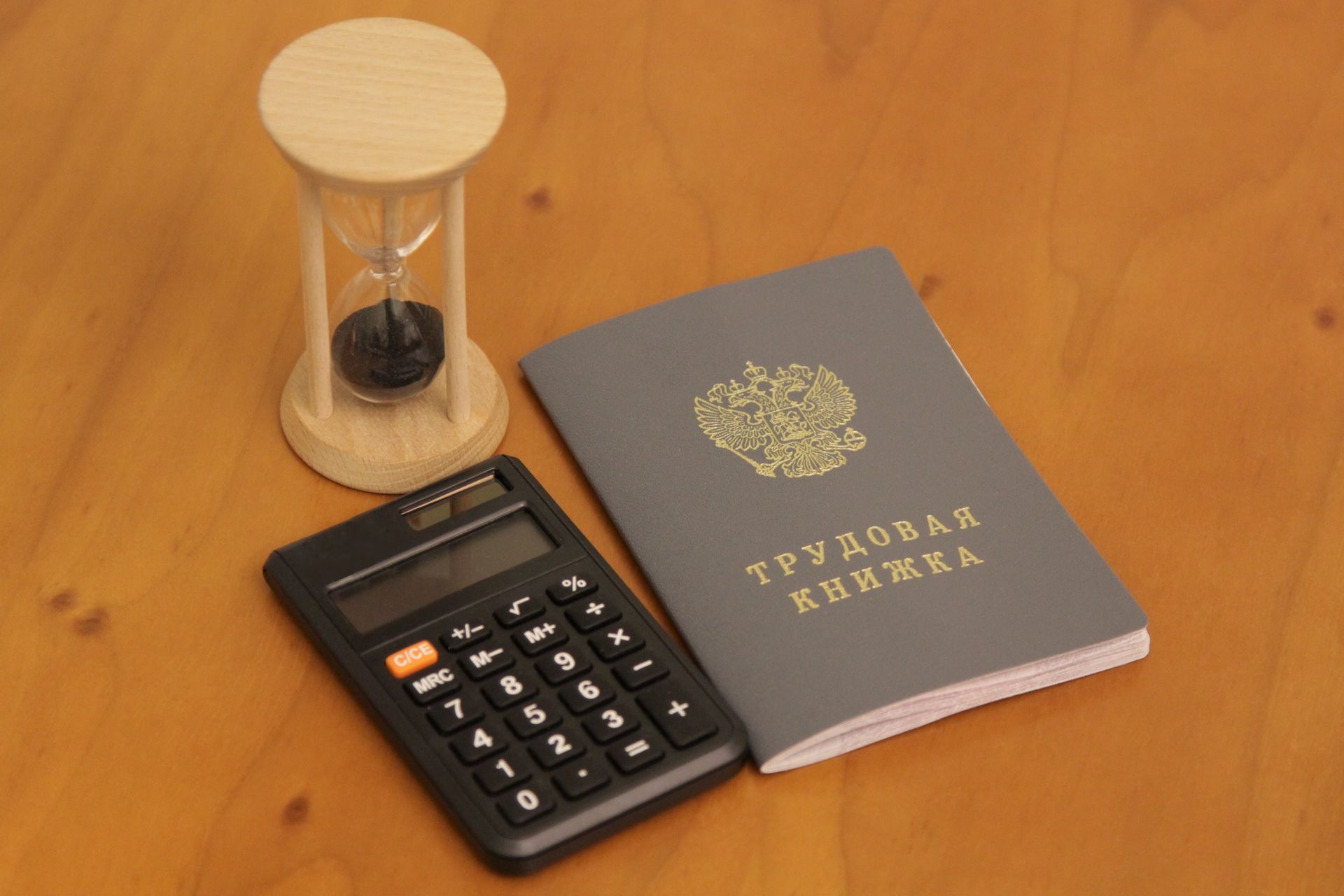
 On 17 March 2026, the Constitutional Court of the Russian Federation adopted Judgement No. 15-П in accordance with Article 47.1 of the Federal Constitutional Law «On the Constitutional Court of the Russian Federation». The case on the review of constitutionality of Articles 129 (part 1), 132 and 135 (part 2) of the Labour Code of the Russian Federation was considered in connection with of complaint of citizen M.N. Sterligova.
Background
Marianna Sterligova was hired by an insurance company as a head of one of the departments at the head office. She was assigned an official salary and a personal bonus «for high employee qualification», amounting to 56% and 44% of her wage, respectively.
For violations of the internal work regulations, three disciplinary sanctions in the form of reprimands were applied to M. Sterligova, followed by dismissal for repeated failure by an employee without valid reasons to fulfill labour duties, if they have a disciplinary sanction. The order to terminate (cancel) her employment contract was found unlawful by the court. After the applicant was reinstated, the personal bonus was cancelled.
By a decision of the court of first instance, upheld by higher courts, M. Sterligova was denied satisfaction of her claims against the employer to recognise this order as illegal and cancel it, and to recover unpaid amounts. The courts concluded that the contested bonus relates to incentive payments and the issue of establishing or canceling it falls solely within the employer’s discretion. It is assigned to employees in order to increase their material interest in improving performance results and is not a guaranteed payment. Cancellation or reduction of such a bonus is permitted due to the violation of the internal labour regulations. Moreover, the employer complied with the procedure for canceling the bonus, as established by the relevant local regulations.
Position of the Court
The employer’s right, as the organiser of the labour process, to locally regulate labour remuneration does not mean they can act arbitrarily.
Each employee’s salary depends on their qualifications, the complexity of the work performed, and the quantity and quality of the expended labour. It is established by the employment contract in accordance with the employer’s current remuneration systems. Additional payments and bonuses of an incentive nature, as well as compensation payments, along with the basic part in the form of a tariff rate or official salary, form part of the wages and must perform the function of an additional means of motivating the employee to increase the efficiency of their work activity.
Along with the incentive bonuses, which can be established for any employee regardless of the position, personal bonuses have become common for heads of the structural divisions. Such bonuses take into account the level of knowledge and experience required for managerial position, form part of the wages, and serve as an additional means of attracting and retaining unique specialists. The very practice of establishing personal bonuses to wages cannot be considered as inconsistent with the principles of justice and equality.
When establishing the conditions for acquiring the right to the incentive payments such as performance-based bonuses for a specific period of time, the fact of their compliance with discipline may also be taken into account, since the awarding of bonuses is conditioned upon the achievement of specific indicators and/or the fulfillment of other conditions. At the same time, incentive bonuses related to the employee’s professional qualifications are established based on criteria that are generally not affected by the disciplinary violations.
Violating the internal work regulations or committing another disciplinary offense does not indicate the employee’s inability to perform their work or a change in their qualifications, and therefore cannot serve as the grounds for reducing the amount, and especially for terminating, these payments. Disciplinary offense entails these consequences only if it demonstrates a discrepancy between the employee’s actual level of the knowledge, skills, abilities and the indicators used to determine the “qualification” payment. However, this decision cannot be based solely on the disciplinary violation. Anything less would be contrary to the principles of justice, equality, and respect for the labor, and would violate the right to remuneration and a fair salary.
As for employees holding managerial positions, the quality of their work directly depends on their attitude toward discipline. The process of managing collective labour presupposes oversight of subordinates and their development by the personal example. Therefore, disciplinary violation committed by the head of the department may affect the effectiveness of their work and serve as the ground for reducing the amount of their qualification-related bonus, but it does not lead to the termination of its payment. Reduction in the amount should not be made without respecting the proportionality between the severity of the violation and the consequences for the employer, on the one hand, and the reduction in the bonus, on the other hand. An admitted disciplinary violation, even if it does have a negative impact on work activity, generally does so only during the period in which it was committed. Accordingly, reduction in the amount of such a bonus is possible only for the period of time during which the violation was discovered by the employer. Any other approach would limit the employee’s rights and violate the principles of fairness, equality, and proportionality, as well as the sectoral principle of the equal pay for work of the equal value.
The Constitutional Court of the Russian Federation found the contested provisions to be consistent with the Constitution insofar as they do not imply the establishment the rules for calculating the incentive bonuses forming part of salary, related to the employee’s qualifications, which would allow the termination of the said bonuses to an employee holding the position of head of a department of an organisation, as well as the arbitrary reduction of their amount solely in connection with a violation of labor discipline by such employee and beyond the paid period during which this violation was discovered by the employer.
The applicant’s case is subject to review.
Press-Service of the Constitutional Court of the Russian Federation